
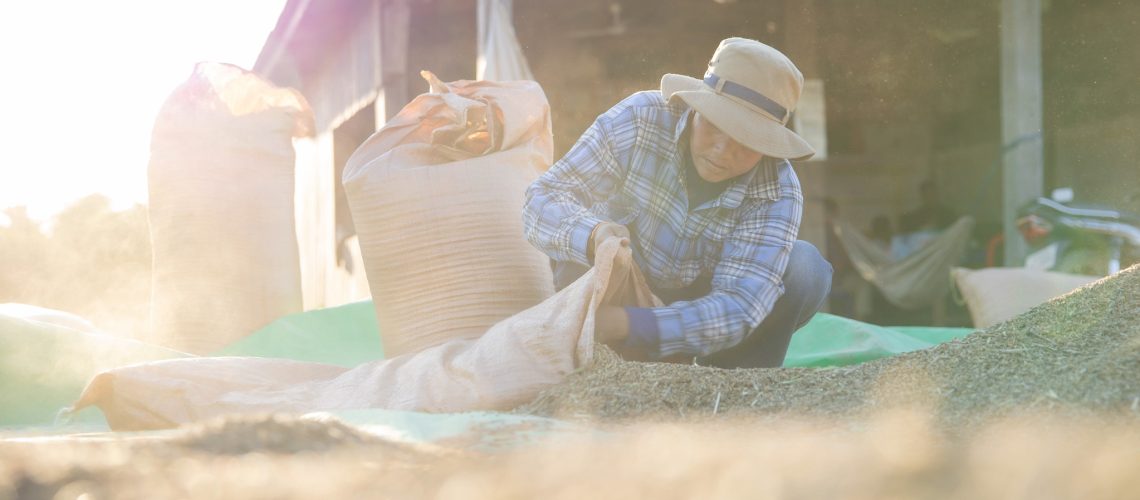
In the remote landscapes of Koh Nhek District, Mondulkiri Province, a profound shift is taking place among smallholder farmers and Indigenous Bunong communities. Driven by the Building Back Better: Organic Agriculture for Smallholder Farmers project, these farmers are actively moving away from climate-vulnerable, chemical-heavy agriculture toward sustainable, 100% organic value chains.
A recent field-level project review coordinated by the Civil Society Partnership for GAFSP (CSOs4GAFSP) and CamboDHRRA highlights exactly how grassroots, community-driven intervention is paving the way for long-term climate resilience and economic self-reliance.
One of the most valuable insights documented during the CSO-led field evaluation is the reality of the organic transition curve. When smallholders transition away from synthetic inputs, crop yields typically experience a temporary dip during the first two years while the soil adapts and sheds chemical residues.
However, the review verified that by year three, soil organic matter, biodiversity, and moisture retention improve dramatically. This ecological recovery stabilizes crop yields near conventional levels while dropping external input expenses to near zero—substantially increasing net profit margins for smallholders. Currently, approximately 30% of target farmers have successfully integrated advanced cover cropping and crop rotation methodologies to accelerate this transition.
Historically, isolated smallholders sold low volumes of paddy individually to opportunistic middlemen, leaving them vulnerable to price exploitation. Through strategic partnership with the Cambodian Agriculture Cooperative Corporation (CACC), the project has strengthened six agricultural cooperatives.
By aggregating their crops, farmers now command significant bargaining power, securing formal contract-farming agreements with major buyers like Amru Rice Cambodia. To protect these economic gains from side-selling, the cooperatives have successfully registered the indigenous “Bunong Rice” brand with the Ministry of Commerce, ensuring premium market pricing.
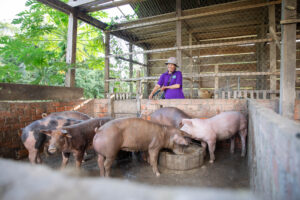
As Board Chair of the Aphivat Meanchey Agricultural Cooperative, 45-year-old Mrs. Heu Sokleap leads a thriving network of 114 members. By leveraging targeted project training in management and logistics, the cooperative now owns and operates its own warehouse and transport vehicle. This structural advancement has eliminated reliance on exploitative intermediaries, securing direct market access and higher profit margins for local smallholders.
The structural transformation extends far beyond the field. Women represent 71% of participating cooperative members in the target district, turning economic inclusion into household decision-making power. Furthermore, targeted socio-behavioral initiatives like the Engaged Father Movement have begun successfully shifting deep-seated gender norms. Men in the target villages are increasingly sharing unpaid domestic care workloads, cooking, and childcare, directly reducing the time-poverty constraints historically borne by rural women.
Watch the other videos here: Output 1: https://youtu.be/JRNHF-aWI_8, Output 2: https://youtu.be/CKWTILGunqY

