
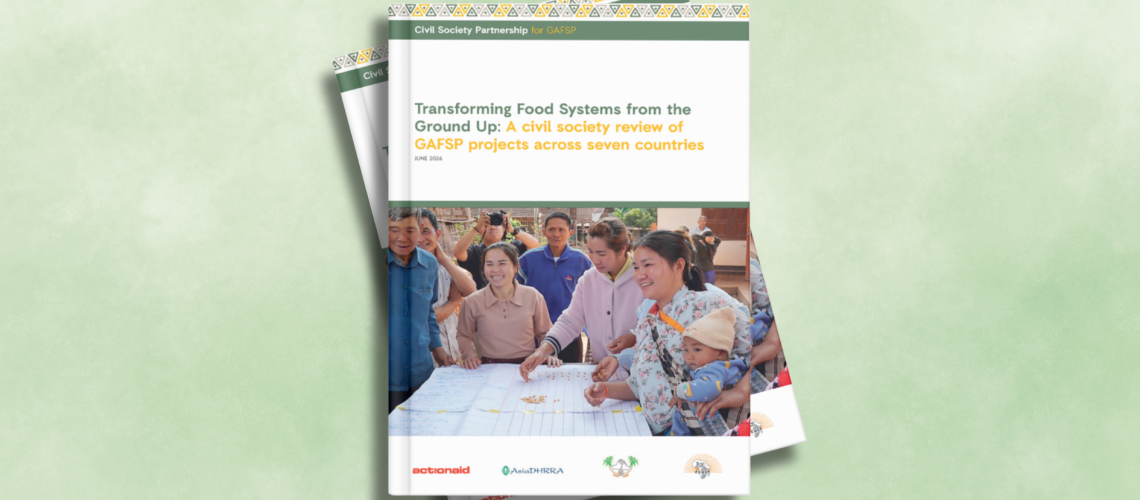
Transforming Food Systems from the Ground Up: How Farmer-Led Action is Driving Global Change
In a world increasingly threatened by climate shocks, conflict, and economic volatility, securing sustainable food systems is one of humanity’s most urgent challenges. Smallholder farmers produce much of the world’s food, yet they remain among the most vulnerable to acute food insecurity and poverty. A ground-breaking initiative reveals how empowering these local communities directly can redefine global agricultural development.
The consolidated report, Transforming Food Systems from the Ground Up, offers a comprehensive review of projects funded by the Global Agriculture and Food Security Program (GAFSP) across seven developing nations: Burundi, Cambodia, the Democratic Republic of the Congo (DRC), Haiti, Lao PDR, Liberia, and Tanzania. Conducted by the Civil Society Partnership for GAFSP—a consortium led by ActionAid International alongside regional farmer networks—this civil society review captures the real-world impact of US$2.5 billion in climate and agricultural funding through the eyes of over 600 smallholder farmers and key local informants.
The overarching finding of the report is clear: farmer-led and locally anchored initiatives consistently outperform traditional top-down development models. When Producer Organizations (POs) and Civil Society Organizations (CSOs) are given central roles in project governance, communities experience greater long-term sustainability, improved market access, and stronger local ownership.
Key highlights from the report demonstrate tangible progress across several vital areas:
- Agroecology and Climate Resilience: Farmers who adopted agroecological methods—such as organic composting, crop diversification, intercropping, and natural pest management—reported healthier soils, stable yields during severe weather, and reduced reliance on expensive chemical inputs.
- Local Seed Sovereignty: Projects supporting farmer-managed seed multiplication and local community nurseries significantly improved seed reliability and affordability, helping farmers break free from unpredictable external supply chains.
- Gender Transformation: By actively engaging men and local communities through gender-transformative frameworks, projects helped redistribute unpaid domestic labor, supported women’s financial independence through savings groups, and elevated women into leadership positions within agricultural cooperatives.
- Integrated Nutrition: Yield increases alone do not end hunger. The report shows that nutrition improves most when improved production is paired with behavior change education, home gardens, and direct links to local health services and school feeding programs.
- Infrastructure and Value Addition: Centrally located, farmer-governed processing hubs—such as rice drying plants and cassava processing equipment—substantially reduced post-harvest losses, created non-farm employment, and allowed smallholders to capture higher market prices.
Read the full report here.

